
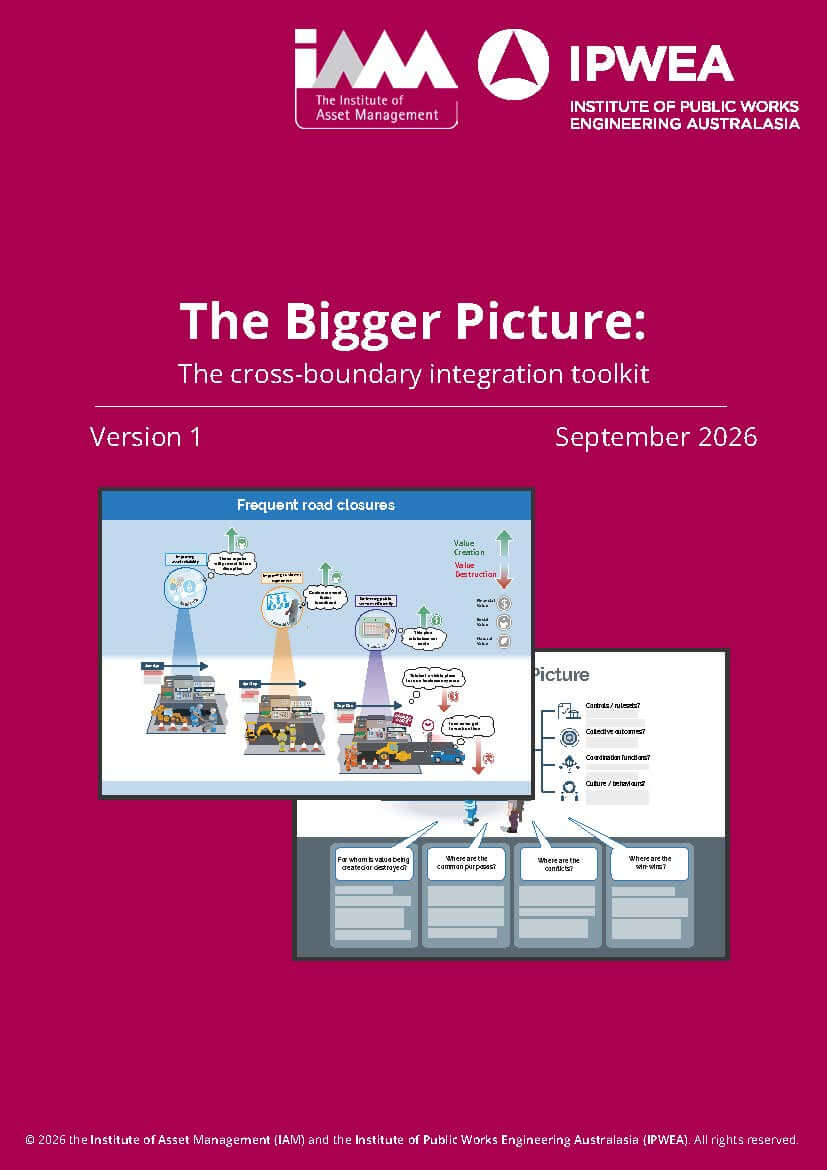
The Bigger Picture - Cross-Boundary Integration
The Bigger Picture: Helping Organizations Work Across Boundaries
Modern infrastructure crosses boundaries every day, between organizations, sectors, regions, and even nations. Yet the way we plan, manage, and govern it often remains stuck inside organizational walls. As pressures intensify, populations grow, technologies reshape entire sectors, and systems become more interdependent, the limits of organization‑centric thinking are becoming impossible to ignore.
Our new Cross‑Boundary Integration resources step directly into this gap. It introduces a fresh suite of globally accessible, visually rich, workshop‑ready resources designed to help practitioners, policymakers, and organizations see the wider system, understand the boundaries that shape it, and work together more effectively for shared, long‑term value.
Why Cross‑Boundary Integration matters
For more than a decade, the Big Picture has helped people understand what asset management feels like inside an organization, revealing the structural, technical, and cultural barriers that prevent coordinated, value‑focused decisions. But today, many of the biggest challenges and opportunities don’t sit within any one organization, they require organizations to work together to achieve shared outcomes.
Green, blue, and grey infrastructure systems increasingly depend on one another. A decision made in one organization can create costs, risks, or unintended consequences for others, sometimes years later. Cross‑Boundary Integration is now central to how societies function and how infrastructure delivers value. Helping envisage this bigger picture is essential for better long‑term outcomes.
What we have created
Drawing on insights from IAM Patrons, Chapters and Branches, the IPWEA Asset Management Committee, and Visual Meaning, we have developed a suite of workshop‑ready materials that complement the Big Picture.
The resources comprise:
- A workshop guide
- A video supporting using the workshop guide
- Examples that bring cross-boundary integration to life
These resources are designed to help:
- Recognize the boundaries being faced by individuals and organizations
- Understand why those boundaries matter
- Explore practical steps to overcome them
They are:
- Globally accessible: simple, non‑technical language for diverse audiences.
- Visually rich: designed to spark dialogue and shared understanding.
- Rooted in relatable examples drawn from real‑world green, blue, and grey infrastructure.
- Conversation‑starters, not policy documents, but tools to reframe thinking at a wider scale.
A call to engage…
Cross‑boundary integration is not a niche technical issue. It is central to how societies function and how infrastructure delivers value. We invite practitioners, policymakers, and organizations to help shape a shared understanding of these challenges and opportunities and support better decisions to create better long-term outcomes for organization and society
We would really like you to share your experiences of working with the resources by sharing your examples and providing feedback.
Examples that bring the cross-boundary integration to life
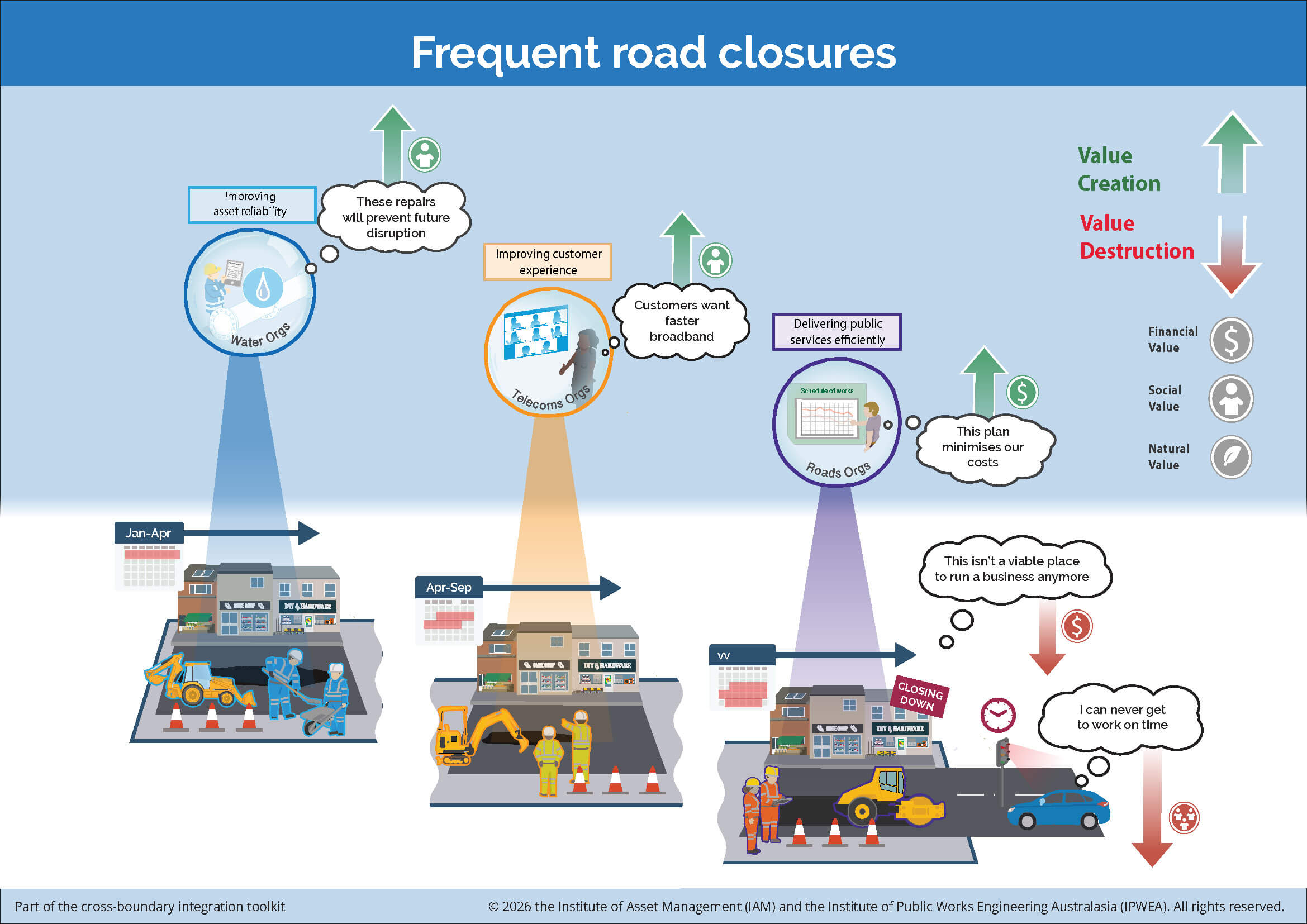
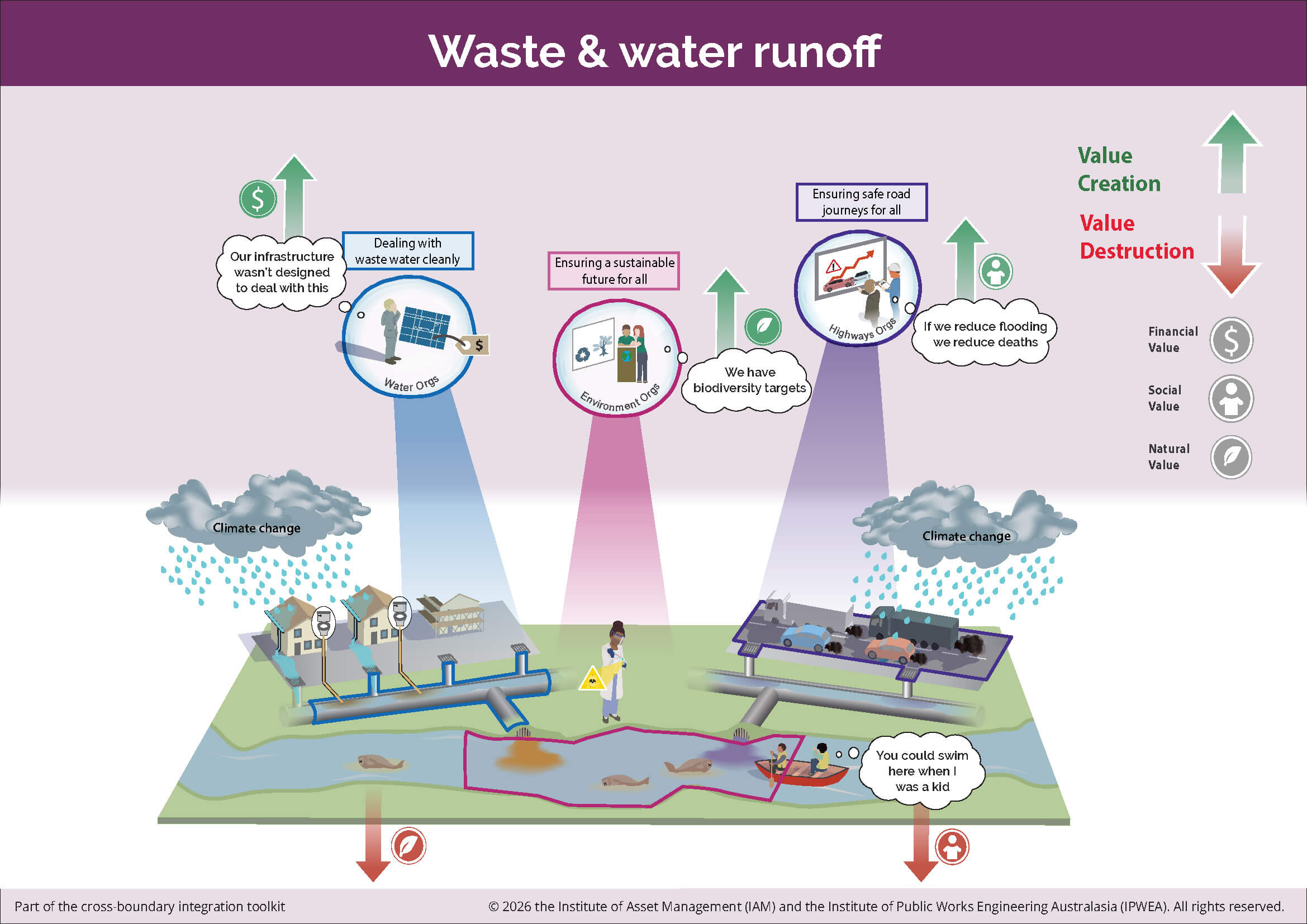
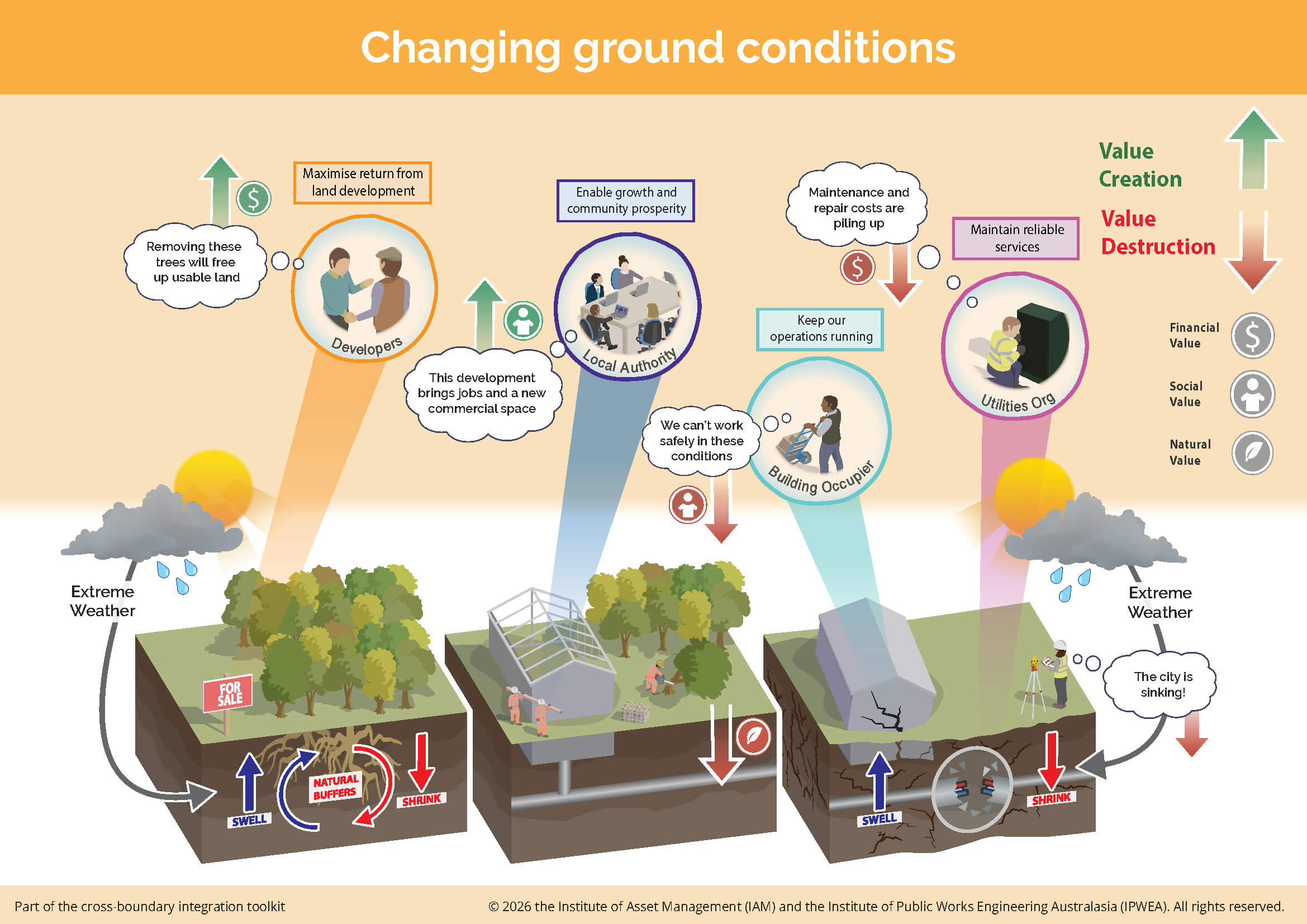
Engagement with our IAM Patrons and the IPWEA Asset Management Committee has surfaced some powerful examples that help people recognize themselves in the problem. Each example is paired with a Bigger Picture illustration, highlighting the boundaries involved and the practical steps that could be taken to address them.
The same road dug up repeatedly by different organizations working to different timetables
Short‑term decisions upstream create ecological and social impacts downstream
Multiple actors with different mandates navigating a shared, complex transition
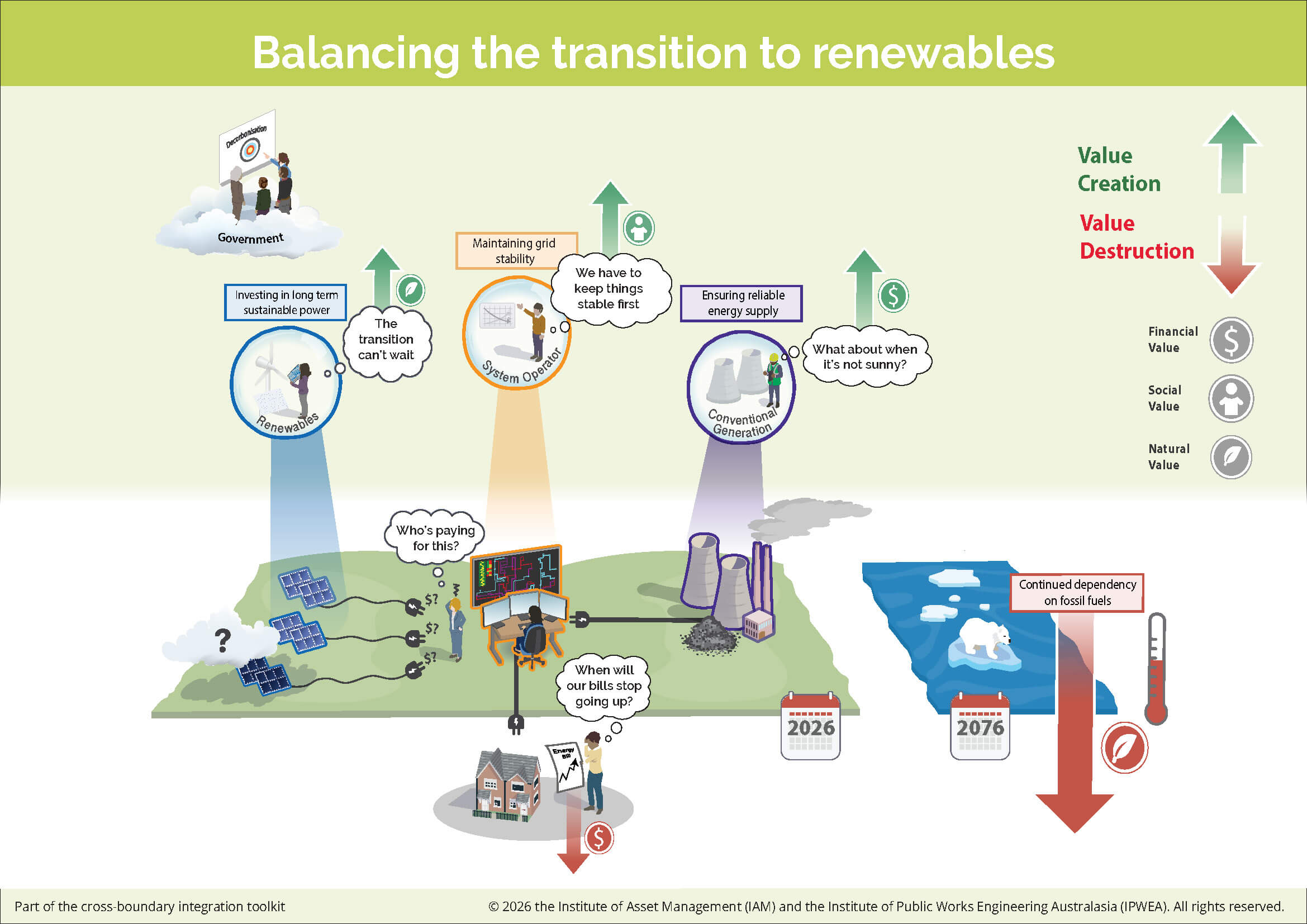
Enabling growth but at what future cost
How the resources should be used
The resources are designed for cross‑boundary workshops, helping participants from different organizations build common language, shared understanding, and stronger commitment to integration. They support richer dialogue, better problem‑framing, and more coordinated action. Over time, it is our aim they will strengthen the relevance of asset management thinking to global, cross‑sector challenges and opportunities.
Why working across boundaries is hard
We know cross‑boundary integration is challenging because of the feedback we hear from our wider asset management community including:
- Conflicting priorities and incentives: What benefits one organization may create costs or risks for another.
- Mismatched planning cycles: Infrastructure timelines rarely align with political tenures or regulatory cycles.
- Unintended consequences across systems: Impacts often emerge slowly, invisibly, or far downstream.
- Data sharing barriers: Data often only creates value when it shared.
- Tacit knowledge and capability gaps: Organizational memory is eroding, and lessons are being lost.
- Education and professional culture: Many professions still reward individual achievement over collaborative problem‑solving.
- Purpose and compromise: Without shared purpose, compromise is unlikely and trust is difficult to build.
- Not all infrastructure has a voice: Green and blue infrastructure doesn’t always have a champion especially considering the creation or erosion of value for future generations.
These challenges are not new, but their scale, visibility, and impact are growing. That is why we have created these resources.
Useful Links